
The size of the bill after a burst pipe is decided mostly in the first few minutes, and almost none of that is about plumbing skill. It is about whether somebody in the house knows where the shutoff is, and whether they get to it before the water finds a wall cavity. Everything after that is cleanup and repair; the window where you can still change the outcome is short.
Find the valve while nothing is wrong
In most Everett housing, the main shutoff sits where the supply line enters the building: a crawlspace, a basement wall, the back of a utility closet, or a garage wall on slab-built homes. Older houses hide it behind stored boxes more often than not. There is also a valve in the meter box at the property line, which usually needs a curb key rather than a hand, and it is worth owning one and knowing which direction closes it.
Two more are worth locating on the same walk. The cold inlet above the water heater isolates the tank without touching the rest of the house, and the small stops behind toilets and under sinks isolate a single fixture, which is all you need for the majority of indoor leaks. Label each one. A tag that is still readable in five years is worth considerably more than a memory of having found it once.
Deciding what has to be dealt with tonight
Not every failure needs somebody at the door before morning, and treating everything as urgent is how people end up paying after-hours rates for a dripping valve. The sorting question is simple: is water still moving somewhere it should not be, and can you stop it yourself? A fixture leak you have isolated at the stop can wait. A supply line you cannot isolate, a sewer backup coming up through a floor drain, or water anywhere near electrical equipment cannot. There is a longer version of how to tell an overnight problem from a morning one worth reading before you are standing in it.
Limiting the damage once the water is off
Keep clear of standing water near outlets, panels or anything plugged in, and kill power to the affected circuits from the breaker if you can reach it dry. Then move contents up and out rather than mopping first: furniture legs, boxes on the floor, anything paper or fabric. Photograph the room and the source before you clean, from several angles, because that record is what an insurance claim actually turns on.
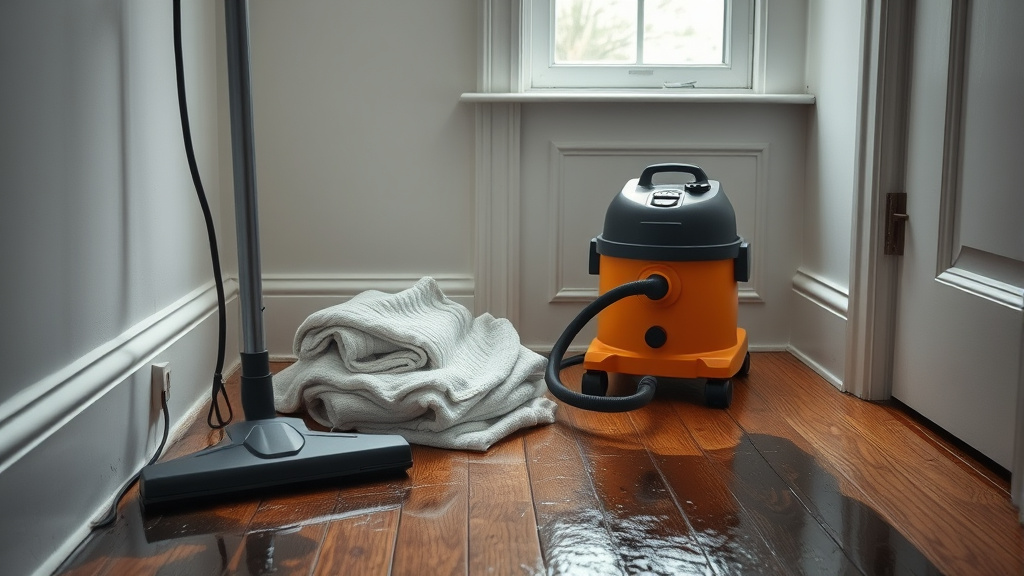
After that it is airflow and extraction. A wet-dry vacuum takes out far more than towels will, and fans plus a dehumidifier moving air across wet material matter more than how quickly the surface looks dry. Wet drywall, pad and subfloor hold water long after the floor feels fine underfoot, and mould starts in a matter of days rather than weeks, so it is worth pulling baseboard and lifting a corner of carpet pad to see what is really wet.
A backup is a different problem from a leak
When water comes up instead of out, the instinct to run a tap and see whether it clears makes things worse. Stop using every fixture in the house, including the washing machine, since all of it is heading for the same restricted line. Keep people away from the water itself, which is not clean, and resist the urge to pour a drain product into a line that is already full.
The cause is frequently roots rather than anything that was flushed. Everett's mature maples, poplars and cottonwoods push toward moisture at a cracked clay joint or a loose cast-iron connection, and a mass of fine roots behaves like a strainer across the pipe. The signature is a backup that returns at roughly the same interval and the same point in the line no matter how careful the household is. Cabling the line restores flow for the evening; whether it stays clear depends on whether the pipe wall was actually cleared and the joint addressed. What each kind of clearing work involves is set out at https://everettdraincleaning.com, which is a more useful thing to read on a quiet afternoon than during the backup itself.
What Snohomish County winters add
Freezes here are brief, which is exactly why they catch people out: pipes in unheated spaces are rarely insulated to the standard a colder region would use. Hose bibs are the usual first casualty, so disconnect hoses in autumn and fit covers. Lines running through a crawlspace, an unheated garage or against an exterior wall are the next, and pipe sleeve costs very little against the alternative.
If a line does freeze, open the nearest tap so meltwater has somewhere to go, then warm the pipe gradually with a hair dryer or heat tape working back from the tap. Never a torch or an open flame. A frozen line that has already split will announce itself the moment it thaws, which is the point at which knowing where your shutoff is stops being theoretical.
Who to call, and what to have ready
Verify the licence and bond with Washington's Department of Labor and Industries before you commit to anyone. It takes a minute and cannot be faked. Ask whether the quote is written, what it covers if opening a wall reveals something larger, and who pulls the permit on work that needs one. What to expect from a local call-out is worth knowing in advance, because comparing options is not something you will do well while standing in water.
Have the practical details to hand before you dial: the address and how to reach the affected area, where the shutoff is and whether it is already closed, what you have observed and when it started, and whether anyone has worked on that line before. A clear two-minute description gets the right van with the right equipment, and that single detail does more for how the night goes than anything else in your control.